Metal Conveyor Belts Drive Components
A metal conveyor belt system is only as reliable as the drive components that power it. Chain links and sprockets must be precisely matched to the belt pitch, wire gauge, and operating load — any mismatch causes accelerated wear, uneven tension, and premature belt failure. PFM SCREEN Belting manufactures chain links and sprockets in-house, engineered to the same tolerances as our belts and available in standard catalogue dimensions or fully custom specifications.
Whether you are specifying a new system, replacing worn components, or retrofitting an existing line, our engineering team can supply compatible drive components — individually or as a complete belt-and-drive package. We supply customers in 60+ countries across food processing, heat treatment, electronics, glass manufacturing, and many other industries.
Drive Components We Supply
► Chain Links
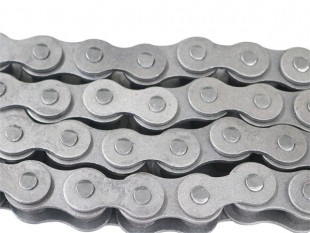
Drive chains form the running edges of most metal conveyor belt types, transmitting pull force from the sprocket to the belt body. We supply seven chain types to cover standard and specialised conveyor belt configurations:
✓ Single-pitch roller chains (A & B series)
✓ Double-pitch conveyor chains
✓ Hollow-pin roller chains
✓ Leaf chains
✓ Cotter-pin roller chains
✓ Riveted-pin roller chains
✓ Attachment chains (with baffles or brackets)
View Chain Links →
|
|
► Sprockets
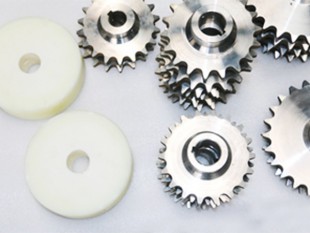
Sprockets are the toothed drive wheels that engage the belt edge chains, converting motor torque into belt movement. The sprocket tooth profile, pitch circle diameter, and tooth count must be precisely matched to the chain specification. We manufacture:
✓ Standard plain-bore sprockets
✓ Hub-mount and taper-lock sprockets
✓ Double-strand and triple-strand sprockets
✓ Custom tooth-count & bore-diameter options
✓ ANSI / ISO / DIN pitch-standard variants
✓ Sprocket sets matched to PFM belt chains
✓ UHMWPE sprockets for sanitary applications
View Sprockets →
|
Why Order Belt and Drive Components from the Same Supplier?
The interface between a conveyor belt and its drive chain is one of the highest-stress points in the entire conveyor system. Small dimensional mismatches — even a fraction of a millimetre in chain pitch or sprocket tooth profile — accumulate over millions of belt cycles and cause wear rates many times higher than a correctly matched system.
Guaranteed Pitch Match
Chain links manufactured alongside the belt wire body share the same dimensional reference. No conversion tables, no tolerance stack-ups — the chain pitch matches the belt rod pitch exactly.
Consistent Material Grade
Ordering belt and chains from a single source means the stainless steel grade, heat treatment, and corrosion resistance specification are aligned across all components — critical in food processing and chemical environments.
Single-Source Accountability
A single technical contact manages belt, chains, and sprockets. When troubleshooting wear or performance issues, there is no dispute between multiple suppliers over which component is responsible.
|
|
Optimised Sprocket Tooth Profile
Sprockets manufactured to match a specific chain type engage the rollers correctly from day one, distributing load evenly across all teeth rather than concentrating stress on one or two contact points.
Simplified Documentation
A single test certificate, material data sheet, and declaration of conformity covering belt, chains, and sprockets simplifies quality documentation for regulated industries including food, pharma, and automotive.
Faster Replacement Procurement
Replacement chains and sprockets reordered from us are guaranteed to match the installed belt specification — even years after the original installation — because all records are retained against your order file.
|
Materials & Standards
Drive components are available in a range of materials to match the operating environment of your conveyor belt application. Chain link specifications conform to ISO, ANSI, DIN, and BS standards as standard; deviation from standard pitch series is available on request for custom applications.
|
Carbon Steel
Standard choice for dry, non-corrosive industrial applications. Higher tensile strength-to-cost ratio than stainless. Typically zinc-plated or heat-treated for improved surface hardness. Suitable for heat treatment furnaces in inert or reducing atmospheres.
|
Stainless Steel (SS304 / SS316 / SS316L)
Preferred for food processing, pharmaceutical, and marine environments. SS316 and SS316L provide enhanced resistance to chloride-containing wash-down solutions, salt spray, and acidic process environments. Required for HACCP-compliant food-grade conveyor systems.
|
Alloy Steel / Specialist Grades
High-temperature or high-load applications may require heat-resistant alloy grades (310S, 314, Inconel variants) for chain links. Sprocket materials are matched accordingly. UHMWPE engineering-plastic sprockets are available for sanitary low-temperature applications requiring quiet, non-metallic drive engagement.
|
Custom Engineering Capability
Standard catalogue dimensions cover the majority of conveyor belt applications — but OEM equipment manufacturers, specialist food processing lines, and high-throughput industrial systems often require non-standard drive component specifications. PFM SCREEN Belting's engineering team can design and manufacture custom drive components from drawings or sample:
|
✓ Non-standard chain pitch (custom P dimension)
✓ Extended attachment tabs and carrier plates
✓ Side-flexing chain for curved conveyor sections
✓ Anti-static or FDA-compliant material grades
|
✓ Sprockets with non-standard bore, keyway, or hub
✓ Sprocket sets for multi-strand belt edge configurations
✓ Tapered or relieved tooth profiles for specific belt weaves
✓ Drive packages covering belt, chains, and sprockets as a set
|
Frequently Asked Questions
Q1. Which metal conveyor belt types require edge chains and sprockets?
Most metal woven conveyor belts use edge chains as their primary drive mechanism. Belt types that standardly require chain-and-sprocket drive include:
• Balanced Spiral Woven Belts — single or double pitch roller chain edges
• Compound Weave Belts — heavier-duty roller chain edges for higher loads
• Eye Link Belts — often with attachment-chain baffles for positive product location
• Ladder Conveyor Belts — side rails driven by sprockets on both edges
• Chain Link Conveyor Belts — the chain links form an integral part of the belt structure
• Flat Flex (Flexible Flat) Belts — use sprocket-driven edge rods
Some belt types — such as honeycomb (flat wire) belts and lehr belts — may be driven by friction rollers or mesh-drive systems without conventional edge chains. Our engineering team can advise on the correct drive configuration for your specific belt type and conveyor layout.
Q2. Can you supply chain links and sprockets for belt systems originally manufactured by other suppliers?
Yes. In most cases we can supply compatible replacement chain links and sprockets for conveyor systems where the belt was originally manufactured by a third party. To confirm compatibility we need:
• The chain pitch (P dimension in mm)
• The chain series (ANSI, ISO/BS, DIN)
• The chain type (single-pitch, double-pitch, hollow-pin, leaf chain, etc.)
• The number of strands (simplex, duplex, triplex)
• Material and any surface-treatment requirement
• Sprocket tooth count, bore diameter, and keyway dimensions (if replacing sprockets)
If you cannot identify the specification from existing documentation, we can work from a sample component or field measurements. An enquiry form is available for
Chain Edge specifications [PDF download].
Q3. How do I calculate the correct sprocket tooth count for my belt speed and drive shaft RPM?
Belt surface speed is determined by the relationship between sprocket tooth count, chain pitch, and drive shaft speed:
Belt speed (m/min) = Tooth count × Chain pitch (mm) × Shaft RPM ÷ 1000
For example, a sprocket with 12 teeth, a chain pitch of 25.4 mm, and a shaft speed of 30 RPM gives a belt speed of:
12 × 25.4 × 30 ÷ 1000 = 9.14 m/min
The tooth count also affects chordal action (the slight speed variation as each chain link engages a tooth). Sprockets with fewer than 17 teeth produce more pronounced chordal action, which can cause product vibration on precision assembly or inspection lines. For smooth, low-vibration conveying, a tooth count of 17 or higher is generally recommended. Our engineering team can review your drive geometry and recommend the optimal tooth count and pitch for your required belt speed and payload.
Q4. What documentation do you provide with drive component orders?
Standard documentation included with every drive component order:
• Material Test Certificate (MTC) — mill certificate confirming the chemical composition and mechanical properties of the material batch
• Dimensional Inspection Report — confirming key dimensions (pitch, roller diameter, pin diameter, plate depth, breaking load) against the specification
• Tensile Test Certificate — confirming ultimate tensile strength and average tensile strength meet or exceed the standard specification
For regulated industries (food, pharma, automotive), we can additionally provide:
• Declaration of Conformity to ISO or ANSI chain standards
• Food-contact compliance statement (FDA / EU 10/2011) for SS316L components
• RoHS declaration for components intended for electronics conveyor applications
Documentation requirements can be confirmed at enquiry stage and specified on the purchase order.
Ready to specify your drive components?
Tell us your belt type, chain pitch, and operating requirements. Our engineering team will recommend the correct chain link series and sprocket specification, or design a custom solution if your application falls outside standard catalogue dimensions. We typically respond within one business day.
Email: [email protected] | Download: Chain Edge Enquiry Form [PDF] | WhatsApp: +86-153-6967-9157
 +86-15369679157