Overview
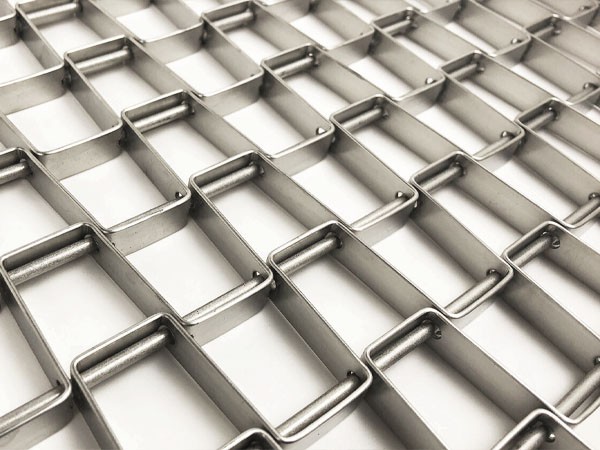
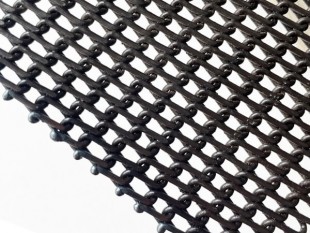
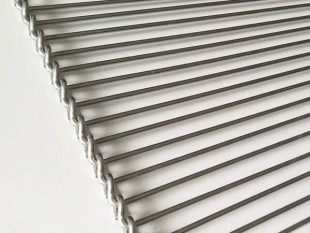
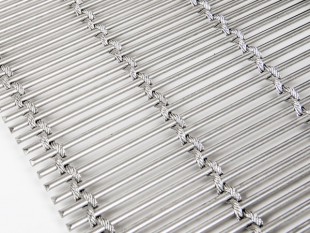
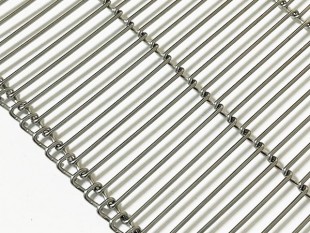
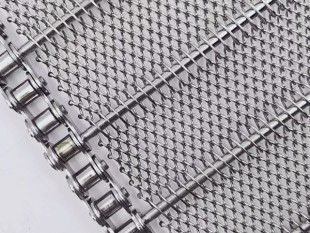
A honeycomb conveyor belt, also called a flat wire conveyor belt, is made from formed flat-strip pickets connected by straight cross rods. The strips stand on edge in a repeating lattice, with their upper edges forming an even carrying level. The openings allow air, steam, water and oil to pass through the belt.
PFM Screen has manufactured metal conveyor belts since 1987. Our honeycomb conveyor belt range offers a versatile option for straight-running food and industrial lines, including baking, cooling, drying, frying, freezing and washing. The relatively simple construction can provide an economical solution when the aperture, material and load rating suit the process.
Product Support, Open Area and Temperature
The even carrying level helps support suitable small, fragile or irregularly shaped products, provided they bridge the actual openings. Cross-rod pitch alone does not define the clear aperture or guarantee that small products will be retained.
The published open-area guide is approximately 40–65%, depending on the configuration. Confirm the calculated open area for the selected pitch, strip thickness, rod diameter and edge arrangement. The open mesh supports airflow and drainage; heating, cooling and washing performance also depend on the process equipment and product loading.
Stainless steel constructions can be reviewed for low-temperature freezing and heated processing. The published range of approximately −80°C to 850°C covers different material and operating conditions; it is not a single continuous-duty rating for every belt. Confirm belt temperature, load, exposure time, atmosphere and the limits of the complete assembly.
Features and Benefits
Even Carrying Level
The upper edges of the formed pickets provide an even support level. Select the actual openings and transfer arrangement for small, delicate or irregular products.
Airflow and Drainage
The open lattice allows air, steam, water and oil to pass through for suitable thermal processing, washing and draining duties.
Rigid Flat-Strip Structure
Strip height and thickness contribute to stiffness. Permissible load and support spacing must account for the reduction in material strength at elevated temperatures.
Drive Options
Positive sprocket drive is common. Suitable specifications can also use friction drum drive, while chain-edge assemblies require matching side-chain sprockets.
Choice of Edge Finish
Welded, clinched and chain-edge arrangements are available for review. Availability depends on the pitch, rod diameter and required construction.
Custom Belt Widths
The published width range is 100–3,000 mm, with wider belts considered on request. Confirm the available aperture count, edge arrangement and support requirements.
Strength Relative to Belt Mass
The open construction combines structural support with less metal coverage than a solid surface. Select strip and rod sizes for the actual load and conveyor layout.
Cleaning and Field Joining
The open structure provides cleaning access. Matching splicing rods can be supplied; joining tools and end-finishing requirements depend on the selected edge and splice design.
Material Options
Carbon steel, galvanised steel, stainless steel 304 and stainless steel 316 are available. Match the material and any coating to the process and cleaning conditions.
Methods of Drive
Positive Sprocket Drive
Matched sprockets engage the belt structure to transmit motion. Confirm cross-rod pitch, tooth profile, sprocket spacing and the required drive diameter. Correct alignment and support remain necessary for smooth tracking.
Friction Drum Drive
A suitable flat-faced drum can drive an approved flat-wire construction through frictional contact. Compatibility depends on belt construction, drum diameter, wrap and traction. Confirm this arrangement for the selected belt rather than assuming every specification is interchangeable.
Chain Edge Drive
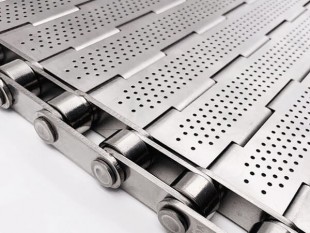
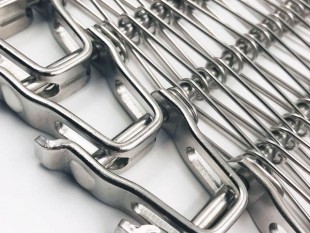
Side chains engage chain sprockets and are connected to the mesh by the specified rod arrangement. Match the chain pitch, attachment details, support and guides to the conveyor. Chain drive does not eliminate alignment or tracking requirements.
Side Plates, Flights and Installation
Side plates and flights can be specified for product retention, lane separation or suitable inclined conveying. Their dimensions and spacing must allow the belt to articulate around the drive and return components. Confirm cleaning access, conveyor clearances and the final splice arrangement before installation.
For a replacement honeycomb conveyor belt, send photos of the carrying surface, underside, edges and drive components along with the belt dimensions.
Need a honeycomb belt for your conveyor?
Send the product size and load, belt width and length, operating temperature and drive arrangement. Include mesh and edge photos so we can review the aperture, material and replacement compatibility.
 +86-15369679157