Woven Rod Bar Conveyor Belts - Frequently Asked Questions
Common questions about woven rod bar conveyor belts, open-mesh drying belts, and stainless steel mesh conveyor belts for food and industrial processing
Q1. What is a Woven Rod Bar Conveyor Belt?
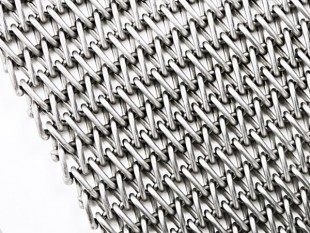
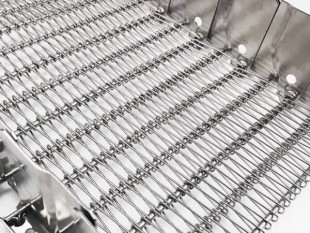
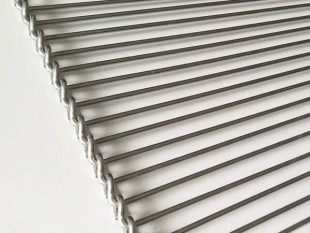
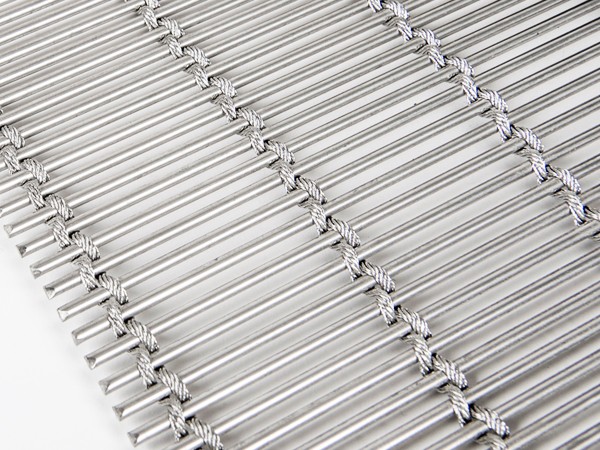
A Woven Rod Bar Conveyor Belt is an open-mesh stainless steel conveyor belt constructed by interlacing smooth, solid round wires in the transverse (weft) direction with stranded wire cables in the longitudinal (warp) direction on a heavy-duty loom. The woven mesh creates a dimensionally stable, high-open-area belt surface with outstanding longitudinal tensile strength.
This belt type is the preferred conveyor for continuous-flow drying, dewatering, baking, and IQF freezing applications in the food, agricultural, and industrial sectors. PFM Screen Woven Rod Bar Conveyor Belts are available in SS304 and SS316 stainless steel, with belt widths up to 3,500 mm and warp configurations from one to four warp wire ropes. Weft wire diameter, warp cable pitch, edge type, and joining method are specified to match each application.
Q2. What applications are Woven Rod Bar Conveyor Belts used for?
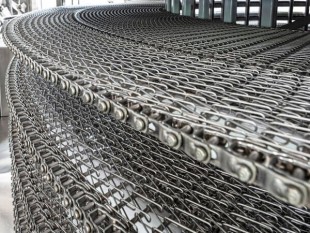
The open-mesh structure of the Woven Rod Bar Belt allows free passage of hot air, cold air, water, and steam — making it the preferred belt type for process applications where through-circulation is critical to product quality.
• Food Drying and Dewatering: Vegetables, fruits, and mushrooms — the mesh surface supports gentle bulk product handling while allowing rapid moisture removal through the belt.
• Pasta and Noodle Drying: Industry-standard belt for continuous pasta dryer lines. Smooth stainless weft wires prevent fresh pasta from sticking; high open area enables precise through-air drying at controlled humidity and temperature.
• Baking: Tunnel oven conveying for biscuits, bread, and snack products. Hot air circulates freely through and under the product for even bottom-heat and consistent baking results.
• Fish and Seafood Freezing (IQF): Open mesh provides efficient cold-air circulation around each product piece in individual quick-freezing lines. SS316 grade provides the chloride resistance required in marine-environment processing facilities.
• Agricultural Drying: Green fodder, tobacco leaf, hops, and grain — suitable for large-scale bulk product drying where high throughput and uniform airflow across the belt width are critical.
• Chemical and Industrial Processing: High-temperature drying and conveying of granular or pelletised materials where robust, corrosion-resistant steel and elevated temperature ratings are required.
Q3. What warp configuration options are available?
The number of stranded warp cables determines the belt's longitudinal tensile strength and suitability for different belt widths and product loads. PFM Screen manufactures Woven Rod Bar Conveyor Belts in four standard warp configurations:
• One warp wire rope: Standard configuration for light-to-medium loads and moderate belt widths. Cost-effective for food and agricultural drying applications.
• Two warp wire ropes: Increased tensile strength for wider belts and heavier product loads. Suitable for most industrial drying and dewatering lines.
• Three warp wire ropes: Heavy-duty configuration for wide conveyor systems and demanding processing environments, including high-temperature chemical drying.
• Four warp wire ropes: Maximum-strength variant for the widest belt widths (up to 3,500 mm) and highest product loads, such as large-scale pasta drying systems or heavy seafood IQF freezing lines.
All four configurations are available in cut-edge or plasma-welded (reinforced) edge finish. Please specify your required belt width and load conditions when requesting a quotation.
Q4. What stainless steel grades are available for Woven Rod Bar Conveyor Belts?
PFM Screen Woven Rod Bar Conveyor Belts are supplied in two standard stainless steel grades:
SS304 (Standard Grade) — The most widely specified grade for food processing, agricultural drying, pasta drying, baking, and general industrial conveying. Excellent corrosion and heat resistance for continuous operation up to 400 °C. Compatible with standard food-grade sanitising agents and steam cleaning.
SS316 (Marine Grade) — Contains added molybdenum for superior resistance to chloride-based cleaning agents and high-salt processing environments. Recommended for seafood (fish, shrimp, shellfish) processing and IQF freezing lines, dairy processing, and any application where aggressive sanitising chemical cycles are used at high frequency.
Both grades comply with food contact material regulations and are suitable for HACCP-certified food production facilities. Material certificates are available on request for food safety audits.
SS316 is not immune to pitting from chloride-based or bleach cleaning. Confirm chemical compatibility, concentration, temperature and contact time, and rinse as specified by the cleaning chemical supplier.
Q5. What temperature can Woven Rod Bar Conveyor Belts withstand?
In standard stainless steel (SS304), PFM Screen Woven Rod Bar Conveyor Belts are rated for continuous operating temperatures up to 400 °C (752 °F) — covering the full range of food drying tunnels, tunnel baking ovens, and mid-temperature industrial drying processes.
For applications requiring operation above 400 °C, PFM Screen can supply Woven Rod Bar Conveyor Belts in heat-resistant alloy steel grades on request. Please advise your process temperature, atmosphere (air, steam, or inert gas), and chemical exposure conditions when enquiring for high-temperature specifications.
Q6. What edge types are available for Woven Rod Bar Conveyor Belts?
Two edge configurations are available:
Cut Edge — The belt is trimmed cleanly at the outermost warp cables. A cost-effective standard option suitable for most conveyor configurations where belt edge loading is low to moderate.
Plasma-Welded Edge (Reinforced Edge) — Weft wires are plasma-welded in groups of 2 or 3 at each belt edge, locking them in position and preventing migration or fraying during high-speed or heavy-load operation. This significantly extends belt service life and is the recommended specification for food processing lines, industrial dryers with high conveyor speeds, and applications where edge integrity is required for product containment or hygiene compliance.
Q7. How is a Woven Rod Bar Conveyor Belt joined end to end?
Three joining methods are available:
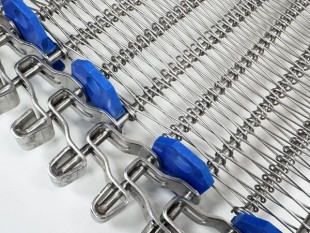
• Pin-Joint (Preferred): The belt's leading and trailing ends are formed with pre-formed loops through which a connecting pin is inserted directly on the machine. No special tools are required; the method allows quick on-site assembly and disassembly and is the standard choice for most installations. Pin-joint preparation is supplied when this joining method is specified.
• Endless Seam: The belt is supplied as a continuous seamless loop, with warp cables interwoven at the join to maintain consistent mesh openings along the full belt circumference. Requires the belt to be installed from the side, which necessitates a specially designed machine frame. Specified when a uniform mesh opening throughout the belt length is critical to process performance.
• Staple Fastener Clipper: Clipper-style staple fasteners allow quick and secure field joining of belt ends without pre-formed loops. Suitable for applications requiring frequent disassembly for maintenance or cleaning, or where conveyor geometry does not permit pin-joint installation.
Q8. What are the standard dimension ranges for Woven Rod Bar Conveyor Belts?
PFM Screen Woven Rod Bar Conveyor Belts are produced to the following dimension ranges:
• Stranded Warp Cable Diameter: 0.7 – 1.2 mm
• Weft Wire Diameter: 1.5 – 2.5 mm
• Weft Wire Gap: 1.0 – 3.0 mm
• Warp Cable Gap: 8.0 – 24.0 mm
• Maximum Belt Width: 3,500 mm
Custom specifications outside these ranges are available on request. To receive a quotation, please provide your required belt width, warp pitch, operating temperature, material grade, and product type. Contact us at
[email protected] or download the Enquiry Form above for a full specification checklist.
Still have a question about your woven rod bar belt?
Send your conveyor model and belt details. Include photos, operating conditions and your replacement requirements.
 +86-15369679157

 Woven Rod Bar Conveyor Belts