Overview
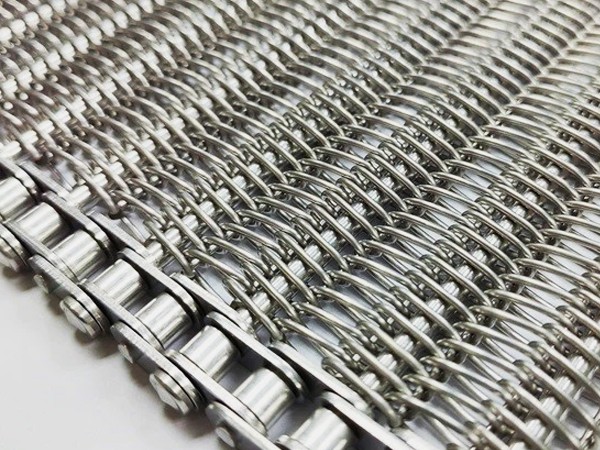
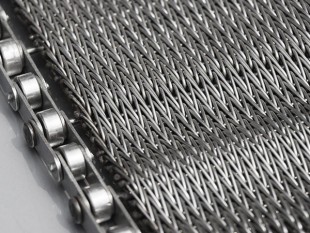
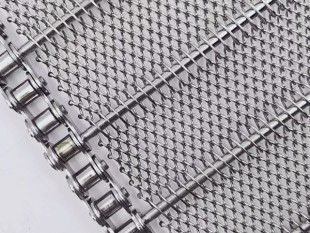
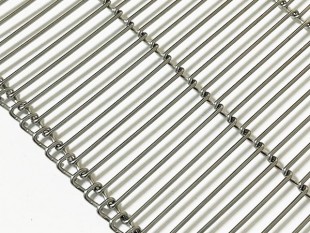
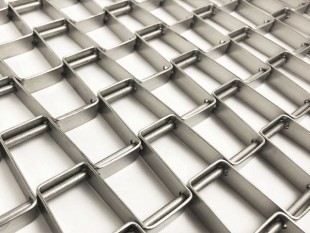
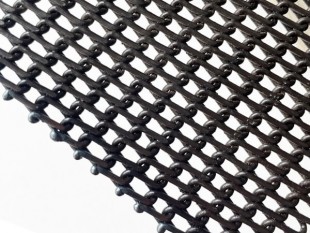
Balanced Weave Conveyor Belt is a stainless steel balanced woven belt with left and right-hand wound spirals, connected by crimped cross wires. At the sides of the belt, the cross wire is welded to the spiral wire. Balanced weave belts can be used for a virtually infinite number of applications. Ranging from super strong for conveying heavy loads over large widths or conveying very hot products to very dense weaves for small products, unsorted goods or products requiring stable support.
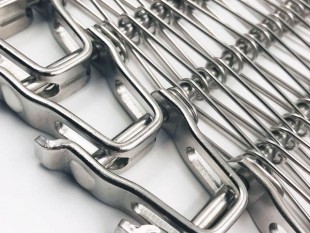
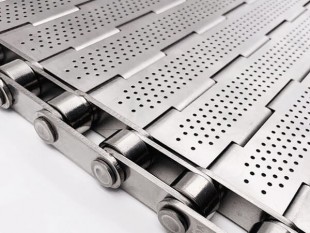
Balanced Weave Conveyor Belts can be executed with chains at both sides. The connection between the chains and the belt is mostly by means of extra cross rods going through the spiral of the belt and trough the chains. The spiral part of the belt will carry the product. The chains will drive and guide the spiral part. Driving this belt is easy by means of chain sprockets.

Balanced Spiral Woven Belts are manufactured in compliance with the latest food safety requirements for food processing equipment such as FDA, GMP and 1935/2004/EC. This ensures our customers a belt that is fit for use in the most demanding food processing applications.Spiral wirelink belts are suitable for a wide range of active food contact applications such as:Baking, Frying, Drying, Cooling, Freezing, Pasteurizing,etc.
Balanced Weave Conveyor Belt can be used in the temperature range of -50º to + 1350ºC. The length and width of the conveyor belt can be customized according to demand.
The stainless steel Balanced Weave Conveyor Belts can additionally be equipped with edge plates and flights. The pins can be bent upwards in some belt types of the spiral wire link belts which will create a standing edge.

Features and Benefits
• High Temperature Resistance
Balanced spiral woven belts are ideal high temperature resistant mesh belts, capable of withstanding extreme heat up to 1150°C (dependent on material), making them suitable for annealing oven conveyor belts, lehr conveyor belts, and other heat treatment systems.
• Excellent Load Distribution
The interwoven spirals and cross-rods provide an even distribution of load across the belt width, ensuring long belt life under both light and heavy-duty applications.
• Open Mesh for Airflow and Easy Cleaning
The open structure promotes efficient air circulation and quick drainage—essential for cooling, drying, or baking. This also allows for easy cleaning, especially in wire mesh baking ovens belts and food-grade applications.
• Customizable Mesh Density and Structure
Available in standard, double, and compound balanced configurations, these belts can be tailored for precise product support or airflow needs. Options range from wide-open designs to close mesh for small or delicate items.
• Material and Edge Versatility
Can be made from stainless steel, carbon stee, nickel-chromium alloys, and more. Edge options include welded, hooked, laddered, and chain-driven, supporting both friction- and sprocket-driven systems.
• Durable and Low Maintenance
Balanced woven belts are engineered for longevity, offering high resistance to wear, thermal fatigue, and corrosion. Their robust construction reduces maintenance frequency and operational downtime.
• Compatible with Accessories
Supports side guards, flights, and chain edges, enabling inclined conveying, product separation, or containment—ideal for complex conveyor layouts.
• Proven Across Industries
From food processing to glass production, from metal heat treatment to packaging lines, these belts are trusted worldwide for their reliability and adaptability.
• Straight-Running and Self-Tracking
The symmetrical spiral design—featuring alternating left and right spirals—ensures smooth, straight tracking. This eliminates belt wander and reduces the risk of system misalignment, especially on long conveyor runs.
Support & Help Info
• Guide to Measuring and Identifying a Balanced Woven Conveyor Belt
• Standard Balanced Spiral Woven Conveyor Belts Quotation
• Installation Procedure for Balanced Spiral Woven Conveyor Belts
• Balanced Spiral Woven Conveyor Belts: A Comprehensive Guide to Drive Mechanisms and Applications
• Balanced Spiral Woven Belt Troubleshooting Guide for Positive Driven Belts
• Woven Mesh Belts Troubleshooting Guide for Friction Drive Systems
• Woven Mesh Belts Troubleshooting Guide for Chain Edge Drive Systems
• Wire number (gauge) conversion tables
• Metal Conveyor Belt Material Chart
Frequently Asked Questions
Everything you need to know about balanced spiral woven conveyor belts
Q1. What is a balanced spiral woven conveyor belt?
A balanced spiral woven conveyor belt — also called a spiral wire link belt or balanced weave belt — is built from alternating left- and right-hand wound wire coils, interconnected by crimped or straight cross wires. At each side edge, the cross wire is welded or finished to secure the structure.
The alternating spiral direction balances internal stresses, resulting in straight tracking and minimal belt wander. It is the most widely used metal conveyor belt type worldwide, valued for its simple construction, broad dimensional range, and versatility.
Q2. What temperature range can balanced weave belts handle?
PFM Screen’s balanced spiral woven belts are rated for -50°C to +1350°C, depending on the alloy selected:
• Food-grade applications (baking, frying, washing, cooling): 304 or 316L stainless steel, suitable up to approx. 870°C continuous service.
• High-temperature furnaces (annealing, brazing, sintering): Inconel 601, NiCr alloys, or 310S, rated up to 1150–1350°C.
• Freezing applications (spiral freezers): 304SS or 316L retain good toughness down to -50°C.
Contact our engineering team with your temperature profile for a material recommendation.
Q3. What industries use balanced spiral woven conveyor belts?
• Food Processing: Baking, frying, washing, cooling, freezing, pasteurizing — FDA, GMP & EU 1935/2004/EC compliant.
• Heat Treatment: Annealing furnaces, brazing ovens, quenching lines, sintering.
• Glass Manufacturing: Lehr conveyor belts for controlled annealing and cooling.
• Automotive & Metal Parts: Conveying castings and stampings through heat treatment lines.
• Chemical & Pharmaceutical: Drying, calcination, powder and granule conveying.
• Packaging & Electronics: Assembly lines and solder reflow ovens.
Q4. What is the difference between standard and double balanced weave belts?
Standard Balanced Weave: Single alternating coils (one left-hand, one right-hand) connected by a crimped cross wire. Produces an open mesh with good airflow and drainage — ideal for baking, annealing, and cooling.
Double Balanced Weave: Uses pairs of coils of each hand intermeshing before connection by the cross wire. This allows closer coil pitching across the width, producing a denser, smaller-aperture mesh — best for small, delicate, or unsorted products needing more surface support.
Both types are available with crimped or straight cross wire, and with welded, laddered, hook, or chain-driven edges.
Q5. Can balanced weave belts be customized in size and material?
Yes — full customization is available:
• Dimensions: Belt width, length, spiral wire diameter, cross wire diameter, and coil pitch.
• Materials (12+ options): 304SS, 316L, 310S, 321SS, 430SS, carbon steel, Inconel 601, NiCr alloy, and more.
• Belt types: Standard, Double, Standard with straight cross wire, Double with straight cross wire.
• Edge finish: Welded, laddered, hook, or chain-driven edge.
• Accessories: Side guards, flights, edge plates, bent-pin standing edges.
Download the enquiry form or contact us with your belt dimensions and application details for a custom quote.
Q6. Are balanced spiral woven belts compliant with food safety standards?
Yes. PFM Screen’s balanced spiral woven belts are manufactured in compliance with:
• FDA — U.S. approved materials for direct food contact.
• GMP — Good Manufacturing Practice guidelines.
• EU Regulation 1935/2004/EC — European food contact materials requirements.
Suitable for the most demanding direct food contact applications: baking, frying, pasteurizing, cooling, and freezing. Material certificates available upon request.
Belt Types
Balanced Spiral Woven Conveyor Belts are available in 4 types different versions. From corrugated wirelink belt that is alternatively woven left and right to create a straight run to rod reinforced belt structure that is designed for applications that involve high temperatures. PFM Screen offers the following 4 types of belt configurations:
Standard Balanced Spiral Woven Belt
The Standard Balanced Spiral Woven Belts consists of alternating left and right hand coils with each coil interconnecting with the next by means of a crimped cross wire.
Double Balanced Spiral Woven Bel
Double Balanced Spiral Woven Belts is similar to standard balanced spiral but uses coil pairs of each handing intermeshing and then link by means of the crimped cross wire with pairs of intermeshing opposite hand coils on a repeat pattern down the length. This style allows for closer pitching of coils across the width for small product handling.
Standard balanced Spiral Woven Belt with straight cross wire
The structure of this belt is similar to “Standard Balanced Spiral” but uses a straight cross wire with single interconnecting coils in a repeat pattern of left hand/right hand down the length. This assembly allows for a closer pitching of single coils across the width for small product handling.
Double Balanced Spiral Woven Belt with straight cross wire
The structure of this belt is similar to “Double Balanced Spiral” but uses a straight cross wire with double intermeshing coils of each handing interconnecting by means of the straight cross wire in a repeat pattern of left hand/right hand coils down the length. This assembly allows for a closer pitching of coils across the width for small product handling.
Edge Availability
Welded Edge
This is the most common and economical edge finish. With welding together of both the coil and crimp wires there are not cut wire ends.
Laddered Edge
Less common than the welded edge the laddered edge is often used where welds are not desirable for the application. It is also an option in applications where welding facilities are not available. The belt edge is also smooth and allows more belt edge flexibility. It is also more efficient in high temperature applications as the laddered edge is not under operational strain in use and therefore less prone to fracture. Generally this edge finish is only available for meshes with a relatively large crimp wire pitch down the length.
Hook Edge
Also less common than the welded edge type the hook edge is often used where welds are not desirable for the application. It is also an option in applications where welding facilities are not available. The belt edge is also smooth and allows more belt edge flexibility. Generally this edge finish is only available for meshes with a relatively large crimp wire pitch down the length.
Chain Edge Driven Mesh
Along with the above mesh edge finishes these meshes can be driven by side chains using cross rods which are located through the mesh coils and then through chains at the edges of the mesh.
Wire Type

Spiral wire link belt with round spiral wire Spiral wire link belt with flat spiral wire
Material Availability
|
Material
|
Maximum Operating Temperature °C
|
|
Carbon Steel
|
550
|
|
Galvanised Mild Steel
|
400
|
|
Chrome Molybdenum
|
700
|
|
304 Stainless Steel
|
750
|
|
321 Stainless Steel
|
750
|
|
316 Stainless Steel
|
800
|
|
316L Stainless Steel
|
800
|
|
314 Stainless Steel
|
1120
|
|
37/18 Nickel Chrome
|
1120
|
|
80/20 Nickel Chrome
|
1150
|
|
Inconel 600
|
1150
|
|
Inconel 601
|
1150
|
If you have other material requirements, please contact us.
Specifications

Balanced Woven Belt
A: Spiral Wire Pitch (mm) B: Spiral Wire Diameter (mm)
C: Cross Rod Pitch (mm) D: Cross Wire Diameter (mm)

Balanced Woven Belt Chain Edge with Chain Edge
A: Spiral Wire Pitch (mm) B: Spiral Wire Diameter (mm) C: Cross Rod Pitch (mm) D: Cross Wire Diameter (mm)
E: Roller Diameter (mm) F: Support Rod Diameter (mm) G: Support Rod Pitch (mm) H: Chain Pitch (mm) I: Plate Thickness (mm)
Balanced Weave Conveyor Belts Specifications
|
Item No.
|
Spiral Wire Pitch
(mm)
|
Cross Rod Pitch
(mm)
|
Spiral Wire Diameter
(mm)
|
Cross Wire Diameter
(mm)
|
|
BWCB-001
|
4
|
4
|
0.9 – 1.2
|
1.2 – 1.6
|
|
BWCB-002
|
5
|
6.4
|
0.9 – 1.2
|
1.2 – 1.6
|
|
BWCB-003
|
5
|
5
|
0.9 – 1.6
|
1.2 – 1.6
|
|
BWCB-004
|
6
|
6
|
0.9 – 1.6
|
1.2 – 1.6
|
|
BWCB-005
|
6
|
8
|
0.9 – 1.2
|
1.2 – 1.6
|
|
BWCB-006
|
6
|
10
|
0.9 – 1.6
|
1.2 – 1.6
|
|
BWCB-007
|
8
|
12
|
1.2 – 2.0
|
1.2 – 2.5
|
|
BWCB-008
|
8
|
13
|
1.2 – 2.0
|
1.2 – 2.5
|
|
BWCB-009
|
8
|
15
|
1.2 – 2.0
|
1.2 – 2.5
|
|
BWCB-010
|
11
|
15
|
1.2 – 2.0
|
1.2 – 2.5
|
|
BWCB-011
|
11
|
20
|
1.6 – 3.0
|
1.6 – 3.0
|
|
BWCB-012
|
11
|
25
|
1.6 – 3.0
|
1.6 – 3.0
|
|
BWCB-013
|
11
|
27
|
1.6 – 3.0
|
1.6 – 3.0
|
|
BWCB-014
|
15
|
20
|
1.6 – 3.0
|
1.6 – 3.0
|
|
BWCB-015
|
15
|
25
|
1.6 – 3.0
|
1.6 – 3.0
|
|
BWCB-016
|
22
|
23
|
1.6 – 3.0
|
1.6 – 3.0
|
|
BWCB-017
|
22
|
33
|
1.6 – 3.0
|
2.0 – 4.0
|
Note: 1. If flat wire is required, please provide the cross section dimensions.
2. Custom specifications are available if you can’t find a suitable size — contact us for a custom quote.