What Is Veneer Dryer Wire Mesh Belts?
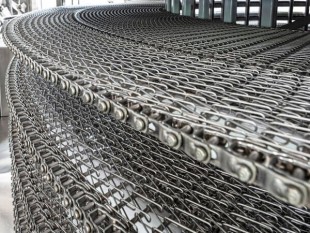
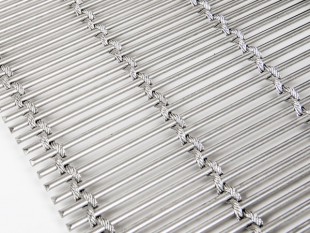
Constructed from heat-resistant materials such as stainless steel or galvanized steel, veneer dryer belts are engineered to withstand operating temperatures up to 600°C, while maintaining structural integrity and minimal elongation. Their open mesh design allows for optimal hot air circulation across the surface of the veneer, which is crucial for achieving uniform drying, minimizing moisture variation, and reducing defects such as warping, checking, or resin burn.
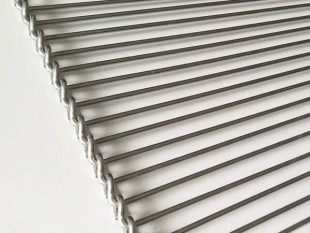
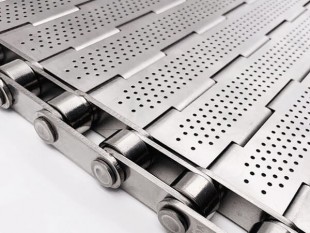
Depending on the dryer configuration and veneer characteristics, two primary belt constructions are used: spiral wire belts for superior flexibility and airflow, and rod-reinforced flat wire belts for enhanced strength and load-bearing capability.
These belts are custom-manufactured to fit various dryer sizes and layout requirements. They are available in different mesh densities, wire diameters, spiral pitches, and reinforcement types to suit the specific needs of face veneer, core veneer, and back veneer processing.
By delivering reliable performance under extreme conditions, veneer dryer wire mesh belts help manufacturers improve drying speed, energy efficiency, and veneer surface quality, ultimately contributing to higher production output and product consistency.
Veneer Dryer Wire Mesh Belts Key Features and Benefits
High Thermal Resistance: Withstand continuous temperatures up to 600°C without deformation or fatigue.
Excellent Airflow: Open mesh structure allows maximum hot air penetration for fast and even drying.
Dimensional Stability: Reinforced design ensures flat surface transport, minimizing veneer curling or cupping.
Clean Surface Contact: Smooth belt texture helps prevent marking, resin buildup, or contamination.
Low Maintenance: Corrosion-resistant materials and rugged construction ensure long-lasting performance in harsh environments.
Custom Configurations: Available in multiple mesh types, widths, and edge treatments to suit different drying line layouts.
Veneer Dryer Wire Mesh Belts Technical Construction
Veneer dryer belts are available in two primary structural designs, each tailored to specific application needs:
1. Spiral Wire Mesh Belts
- Constructed from interlinked pre-formed spirals and cross rods
- Offers high tensile strength and excellent flexibility
- Ideal for wide belt conveyors due to minimal distortion
- High porosity for efficient ventilation and drying speed
2. Rod-Reinforced Flat Wire Belts
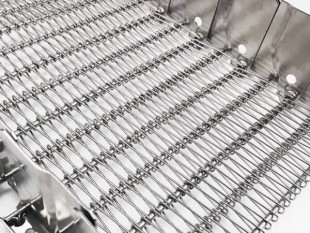
- Features flat metal strips held together by solid cross rods
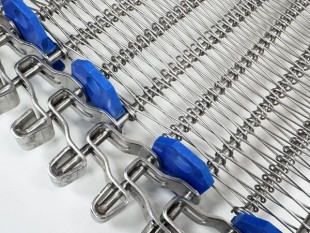
- Often reinforced with side chains for stable tracking
- Designed for heavy-duty drying lines with large veneer loads
- Durable under long-span or dual-deck dryer conditions
Edge Availability for Veneer Dryer Wire Mesh Belts
The edge type of a veneer dryer wire mesh belt plays a crucial role in determining its performance, durability, and compatibility with specific dryer systems. Choosing the right edge style helps ensure proper belt tracking, reduces wear and tear, and minimizes the risk of damage to the veneer.
Here are the three commonly available edge finishes:
1. Welded Edge

Structure:
The cross rods and spirals or flat strips are firmly welded at both sides of the belt. The wire ends are fused to create a clean, flat, and sealed edge.
Advantages:
- Prevents fraying and unraveling
- Offers a smooth edge for better safety and handling
- Ideal for high-speed or high-temperature operations
- Strong and durable under tension and frequent usage
Applications:
- Standard in most roller or jet dryers
- Suitable for wide belts or long drying lines
- Recommended for operations requiring long service life and minimal maintenance
2. Laddered Edge

Structure:
The cross rods extend slightly beyond the spirals or flat wires and are bent into a ladder-like pattern to form open loops at the edge, without welding.
Advantages:
- Lightweight and flexible
- Easy to repair or replace individual sections
- Allows for limited stretching or shrinkage
- More economical than welded edge
Applications:
- Medium-duty veneer dryers
- Situations where periodic belt maintenance or section replacement is needed
- Suitable for manual belt installation or adjustment
Note: Less resistant to fraying over time compared to welded edges.
3. Hook Edge

Structure:
The belt ends are bent into "hooks" or loops that interlock during installation. Often used when the belt must be joined or disconnected easily.
Advantages:
- Easy to install and uninstall without specialized tools
- Allows for quick belt replacement and cleaning
- Common in modular or segmented belt systems
Applications:
- Dryers where frequent belt change is required
- Ideal for maintenance-intensive environments
- Common in older veneer dryer models or custom conveyors
Note: Not as secure or long-lasting as welded edge under high-tension loads.
4. Laddered and Welded Edge
Structure:
A hybrid design where cross rods form ladder-style loops, but the wire ends are also welded for added strength. This combines the benefits of both laddered and welded edges.
Advantages:
- Enhanced durability over standard laddered edges
- Maintains flexibility while preventing wire shift
- Balanced strength and ease of repair
- Provides good edge sealing without compromising handling convenience
Applications:
- Medium to heavy-duty veneer drying systems
- Scenarios requiring a balance of stability and flexibility
- Applications where minor field repair is expected
- Custom or hybrid dryer systems with moderate tension
Spiral Wire Type for Veneer Dryer Wire Mesh Belts
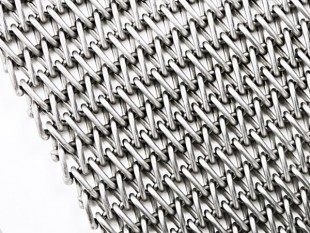
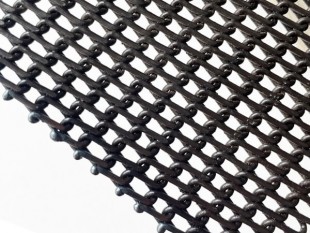
Spiral wire mesh belts are widely used in veneer dryer systems due to their excellent flexibility, air permeability, and structural stability. The spiral structure is formed by interconnecting coiled wires (spirals) with straight cross rods, creating a balanced mesh ideal for high-temperature drying environments.
Two main spiral wire styles are commonly used:
1. Spiral Flat Wire

This design uses flat-shaped spiral wires interlinked with cross rods. The flat wire has a rectangular cross-section, offering a wider surface contact and enhanced structural strength.
Advantages:
- Provides a smoother and flatter belt surface
- Better load distribution—ideal for heavier veneer sheets
- Reduces marking or indentation on delicate veneer
- Improved lateral stability and resistance to deformation
- Higher thermal mass can retain and transfer heat more evenly
2. Spiral Round Wire
Uses round cross-section spiral wires wound and linked by cross rods. This is a more flexible and lightweight configuration compared to flat wire.
Advantages:
- Lighter weight reduces drive load and energy consumption
- Higher flexibility—better adaptability to roller tensioning systems
- Easier to install and align, especially in narrow or small dryers
- More open mesh structure for enhanced airflow and drying efficiency
- Lower material cost compared to flat wire
Veneer Dryer Wire Mesh Belts Material Options
|
Material Type
|
Properties & Applications
|
|
Stainless Steel 304
|
Good corrosion resistance and temperature performance, cost-effective for general veneer dryers
|
|
Stainless Steel 316/316L
|
Enhanced resistance to acid, moisture, and high temperature; suitable for harsh resin-heavy environments
|
|
Galvanized Steel
|
Affordable option for medium-temperature drying applications
|
|
Carbon Steel
|
High strength and rigidity, used in heavy-duty drying systems
|
All materials are available with different wire gauges and mesh densities based on specific drying equipment configurations.
Veneer Dryer Wire Mesh Belt Specifications
|
Veneer Dryer
Wire Mesh Belt Specifications
|
|
Item No.
|
Spiral wire pitch
|
Cross rod pitch
|
Spiral wire diameter
|
Cross wire diameter
|
|
mm
|
mm
|
mm
|
mm
|
|
with flat spiral wire
|
|
VDB-F-001
|
25
|
35.0
|
2.5 x 1.2
|
3.1
|
|
VDB-F-002
|
33.3
|
35.0
|
2.5 x 1.2
|
3.1
|
|
VDB-F-003
|
20
|
25.0
|
2.5 x 1.2
|
3.1
|
|
VDB-F-004
|
25
|
25.0
|
2.5 x 1.2
|
3.1
|
|
VDB-F-005
|
15
|
25.0
|
2.5 x 1.2
|
3.1
|
|
VDB-F-006
|
20
|
25.0
|
2.5 x 1.2
|
3.1
|
|
VDB-F-007
|
8.5
|
16.0
|
2.0 x 1.0
|
2.8
|
|
VDB-F-008
|
15
|
20.0
|
2.0 x 1.0
|
2.8
|
|
VDB-F-009
|
6.5
|
15.0
|
2.0
x 1.0
|
1.8
|
|
VDB-F-010
|
8.5
|
17.0
|
2.0
x 1.0
|
1.8
|
|
VDB-F-011
|
6.5
|
10.0
|
1.8 x 1.1
|
2.0
|
|
VDB-F-012
|
7.5
|
12.0
|
1.8 x 1.1
|
2.0
|
|
VDB-F-013
|
6.5
|
10.0
|
1.8
x 1.1
|
1.8
|
|
VDB-F-014
|
5.5
|
10.0
|
1.8
x 1.1
|
1.8
|
|
VDB-F-015
|
5.1
|
6.4
|
1.4 x 0.7
|
1.6
|
|
VDB-F-016
|
4.5
|
6.0
|
1.4 x 0.7
|
1.6
|
|
with round spiral wire
|
|
VDB-R-001
|
8.5
|
15.0
|
1.6
|
2.0
|
|
VDB-R-002
|
12
|
15.0
|
1.6
|
2.0
|
|
VDB-R-003
|
6.5
|
17.0
|
1.4
|
1.6
|
|
VDB-R-004
|
8.5
|
17.0
|
1.4
|
1.6
|
|
Note: Custom specification is available if you can't find the suitable size.
|