Products

Heat Treatment Conveyor Belts

Heat Treatment Conveyor Belts

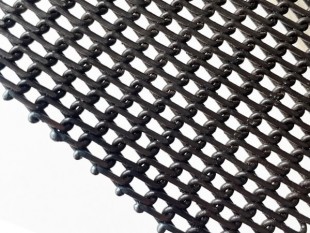
Heat treatment conveyor belts carry metal components through continuous mesh belt furnaces for annealing, hardening, tempering, carburizing and other thermal processes. The carrying surface must support the parts while remaining compatible with the furnace temperature, atmosphere and loading conditions.

PFM SCREEN supplies balanced spiral woven, compound weave and reinforced chain link belts for suitable furnace applications. We match the mesh construction, wire dimensions, material and edge arrangement to an existing belt or a new equipment requirement.

Product Brochure & Enquiry Forms

Find the right brochure or enquiry form in the Downloads section below. Use the When to use it notes to choose the relevant resources for your heat treatment conveyor belt.

Complete only the form you need. Unsure of the specifications? Send us belt photos, basic dimensions and the furnace conditions you know.

View Downloads & Enquiry Forms WhatsApp Email

  • Overview
  • Specification
  • Applications
  • Downloads
  • FAQ

    Heat Treatment Conveyor Belts Overview

    A heat treatment conveyor belt is specified by its duty in the furnace, rather than by one fixed weave. Depending on the equipment, the belt carries parts through heating, soaking and controlled cooling sections, or transfers them from the furnace to a separate downstream operation.

    The belt is part of the furnace transport system. Product temperature uniformity and metallurgical results also depend on the heating system, atmosphere control, residence time and loading pattern. Choosing the mesh means balancing part retention, carrying-surface support, gas access and hot operating strength.

    Belt Constructions for Furnace Service

    Heat Treatment Conveyor Belts Balanced Spiral Woven Belts

    Balanced Spiral Woven Belts

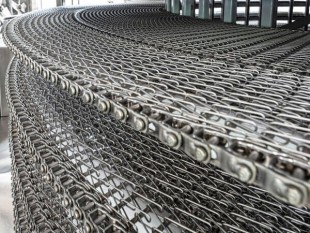
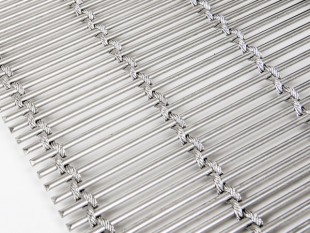
    Alternating left- and right-hand spirals are linked by cross rods. Standard and closer-mesh configurations allow the carrying surface to be selected around the component footprint and the required openness.

    • Selection direction: consider this family when both product support and access for heat and furnace gases matter.
    • Geometry to review: spiral pitch, rod pitch, spiral-wire diameter and cross-rod diameter.
    • Equipment match: retain the correct cross-rod arrangement and drive engagement when replacing an existing belt.
    View Balanced Spiral Woven Conveyor Belts
    Heat Treatment Conveyor Belts Compound Weave Belts

    Compound Weave Belts

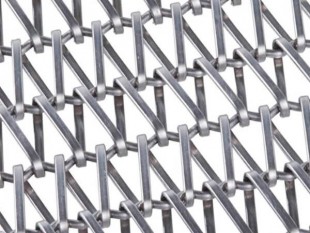
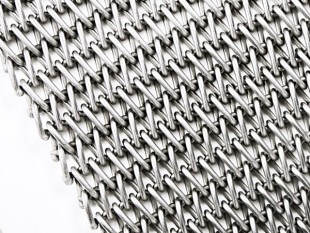
    Closely intermeshing spirals joined by multiple straight cross wires form a dense, relatively flat carrying surface. Round- and flat-spiral-wire versions are available within this product family.

    • Selection direction: small components, narrow contact bases or parts requiring more continuous support.
    • Geometry to review: clear openings, spiral-wire form and the number and arrangement of cross wires.
    • Process balance: a denser surface reduces through-belt openness; evaluate support and gas access together.
    View Compound Weave Conveyor Belts
    Heat Treatment Conveyor Belts Rod Reinforced Chain Link Belts

    Rod Reinforced Chain Link Belts

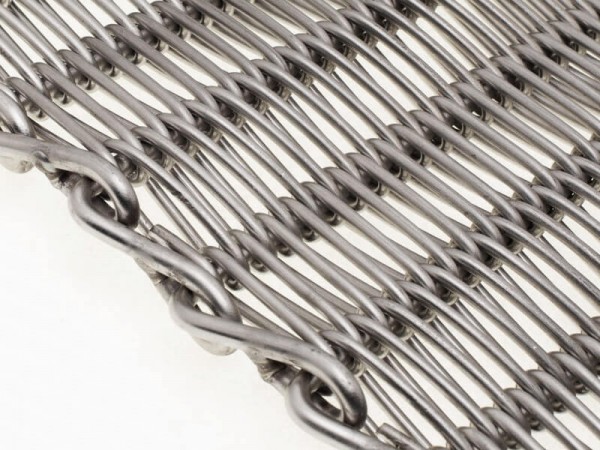
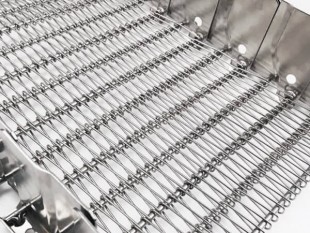
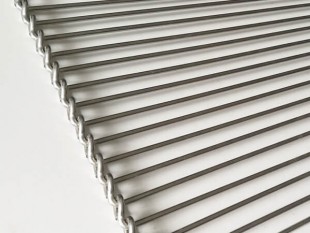
    Chain link, also called conventional weave, uses interwoven spiral coils. Cross rods reinforce the mesh and improve support and lateral stability compared with a comparable unreinforced construction.

    • Selection direction: suitable furnace duties where the part size permits an open carrying surface.
    • Geometry to review: spiral pitch, rod pitch, wire diameters and the arrangement of the spiral panels.
    • Equipment match: identify panel handing and joints on an existing friction-driven belt.
    View Chain Link Conveyor Belts
    Heat Treatment Conveyor Belts Duplex Rod Reinforced Chain Link Belts

    Duplex Rod Reinforced Chain Link Belts

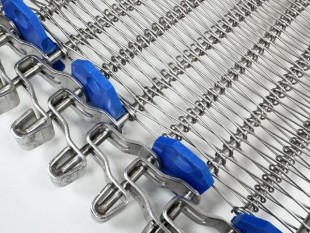
    Twin intermeshing coils provide a denser carrying surface than a comparable single-coil chain link mesh. Cross rods reinforce the assembly.

    • Selection direction: when additional support is required within the chain link family.
    • Geometry to review: paired-coil arrangement, openings, cross rods and flexibility around the end rollers.
    • Process balance: compare the resulting mesh density and hot loading requirements before substituting it for another construction.
    View reinforced chain link options
    Chain link is a weave name. It does not automatically mean side-chain drive. Rod reinforcement, side drive chains and belt edge finishes are separate specification details.

    What Matters in a Furnace Belt

    Support the smallest component

    Compare the actual mesh openings with the smallest dimension that can enter the mesh, not only the overall part length. Consider how components lie on the belt, whether they can tip, and whether trays or fixtures support them.

    Balance support and openness

    Open mesh gives process gases access through the belt. Closer mesh gives small parts more support. The loading layer and any trays can affect gas access as much as the mesh itself.

    Specify strength at working temperature

    The belt carries its own weight and the product load while transmitting the force needed to move around the conveyor. High-temperature loading must be assessed for the complete belt and support arrangement.

    Match the existing transport system

    The belt needs to suit the drive, end rollers, guides, support surfaces and return path. A change in mesh geometry can affect both product support and the way the belt passes around the conveyor.

    Need a belt matched to your furnace?

    Send the process, normal operating temperature, belt dimensions and existing belt photos. Include the furnace atmosphere and part loading if available.

Related Products